Emergency Medicine and First Response for Kids
Know What To Do When Something Goes Wrong
A hands-on program that introduces students to practical first aid, emergency decision-making, injury assessment, and responsible action.
Students learn how to recognize common emergencies, protect themselves and others, communicate clearly, and provide appropriate basic assistance while professional help is on the way.
The goal is not to turn children into medical professionals. It is to help them become calmer, more observant, and more capable in situations where good judgment and timely action matter.
Ages 10-14 | Spring Program | Small-Group Instruction | Dorado, Puerto Rico
Confidence Built Through Knowledge and Practice
Emergencies can be frightening, especially when a young person does not understand what is happening or what to do next.
Emergency Medicine and First Response gives students a structured opportunity to learn about injuries, illness, personal safety, and the first steps of emergency care before they encounter those situations in real life.
Students practice how to:
Pause and assess before acting
Recognize immediate danger
Protect themselves from becoming another victim
Determine when an adult or emergency service is needed
Communicate clearly under pressure
Provide basic, age-appropriate assistance
Reassure an injured or frightened person
Work as part of a response team
Recognize the limits of their training
The program emphasizes thoughtful decisions rather than dramatic heroics.
What Students Will Learn
Scene Safety
Students learn to look for hazards before approaching an injured person. They consider traffic, fire, electricity, water, unstable objects, animals, hazardous substances, and other dangers that could place rescuers at risk.
Emergency Assessment
Students practice gathering information quickly and calmly:
What happened?
Is the person responsive?
Are they breathing normally?
Is there serious bleeding?
Is the situation getting worse?
What help is available?
Emergency Communication
Students learn how to contact emergency services and provide useful information, including:
The location
The nature of the emergency
The number of people involved
The person’s condition
Hazards at the scene
Actions already being taken
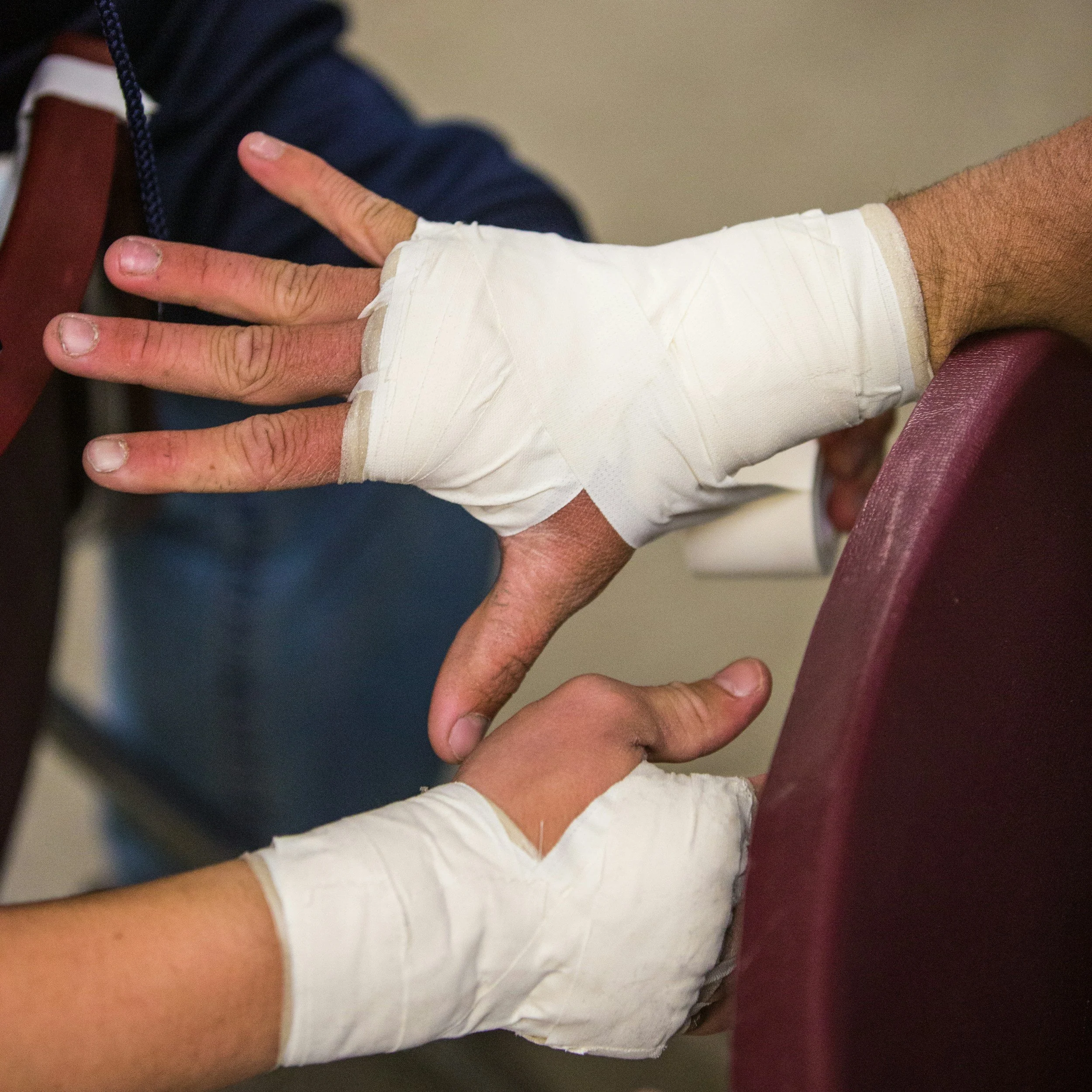
Bleeding and Wound Care
Students are introduced to basic wound assessment, protective barriers, direct pressure, dressing application, and the difference between minor injuries and bleeding that requires urgent professional care.
Choking Response
Students learn how to recognize a severe airway obstruction, summon help, and respond appropriately according to the person’s age and condition.
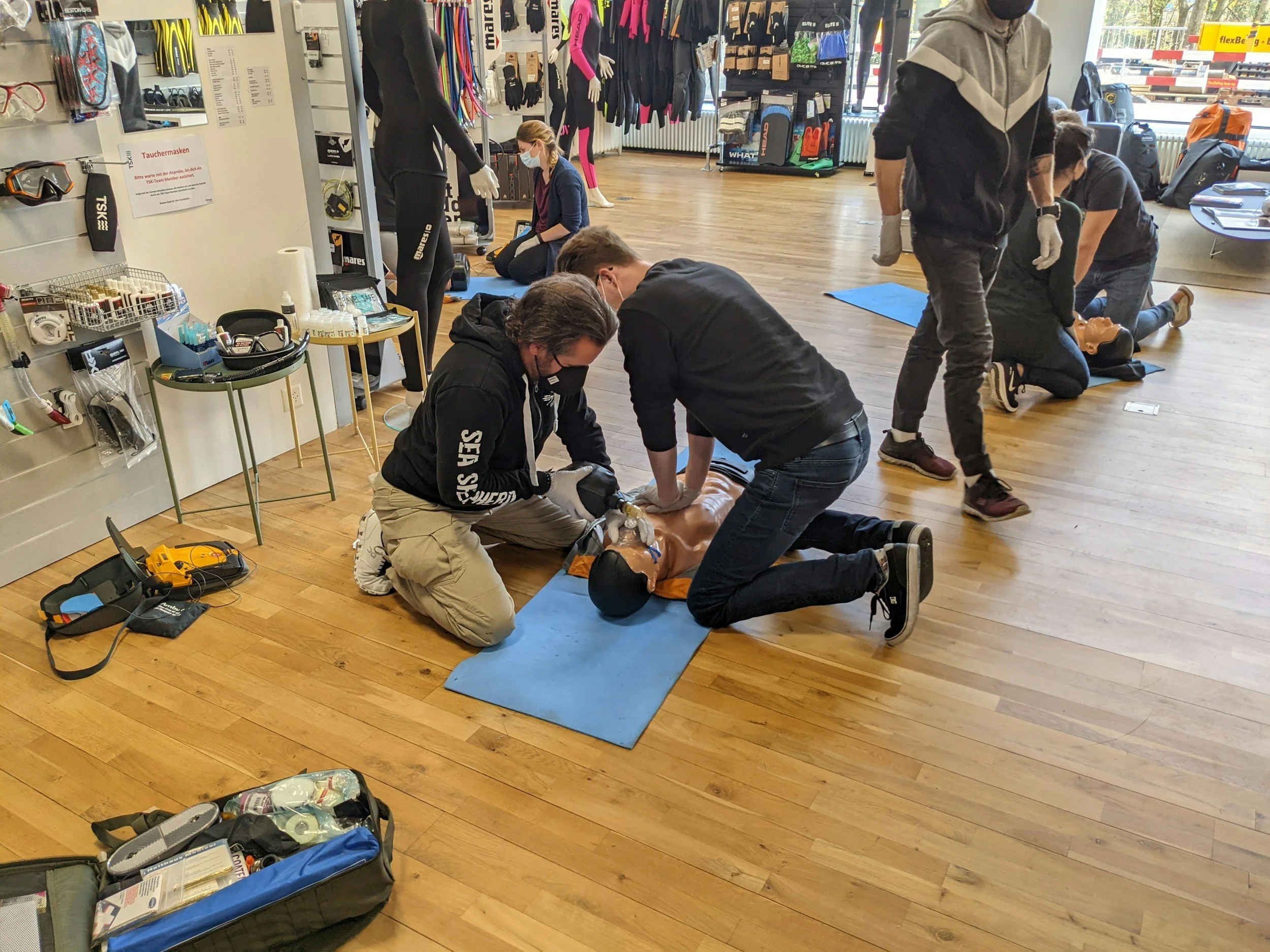
CPR and AED Awareness
Students are introduced to the purpose of cardiopulmonary resuscitation and automated external defibrillators, along with the importance of rapid activation of emergency services.
Practical activities may include supervised skill practice with training equipment when available.
Sprains, Strains, Fractures, and Splinting
Students learn how to recognize signs of a possible musculoskeletal injury, avoid unnecessary movement, support an injured area, and create simple improvised splints during guided scenarios.
Burns
Students explore common causes of burns, immediate first-aid priorities, and actions that can make a burn injury worse.
Heat Illness and Dehydration
Students learn to identify warning signs associated with dehydration, heat exhaustion, and heat stroke—especially important in Puerto Rico’s climate.
Medical Emergencies
Age-appropriate instruction may introduce warning signs associated with conditions such as:
Fainting
Seizures
Allergic reactions
Asthma emergencies
Diabetic emergencies
Shock
Sudden changes in consciousness
Students learn that recognizing a problem and obtaining help may be more important than attempting to diagnose it.
Skills Students Will Practice
Emergency Medicine and First Response combines health knowledge with practical thinking, communication, and leadership.
Students practice:
Situational awareness
Risk assessment
Calm decision-making
Clear verbal communication
Calling for help effectively
Following an emergency action sequence
Using protective barriers
Applying dressings and bandages
Supporting and immobilizing injuries
Monitoring an injured person
Working with a partner or response team
Giving and following clear directions
Reassuring others
Reflecting on what went well and what should change
Recognizing when a situation exceeds their level of training
A Possible Program Journey
The exact sequence may be adjusted according to student ages, group schedule, available equipment, and the final program format.
Session 1: First Responder Mindset
Stay Safe. Stay Calm. Get Help.
Students learn the priorities of emergency response, including scene safety, personal protection, assessing the situation, and activating appropriate help.
Session 2: Emergency Communication
Tell the Right People What They Need to Know
Students practice calling emergency services, providing accurate information, giving directions, and communicating with adults during stressful situations.
Session 3: Bleeding and Wound Care
Protect, Apply Pressure, and Monitor
Students learn basic wound care, protective barriers, dressings, bandaging, and how to recognize bleeding that requires urgent attention.
Session 4: Sprains, Fractures, and Splinting
Support the Injury Without Making It Worse
Students investigate common musculoskeletal injuries and practice stabilizing an injured limb using standard and improvised materials.
Session 5: Choking and Airway Emergencies
Recognize When Someone Cannot Breathe
Students learn the signs of serious choking, how to summon help, and the age-appropriate response sequence.
Session 6: CPR and AED Awareness
When Every Minute Matters
Students are introduced to cardiac arrest response, the purpose of CPR, the role of an AED, and the importance of rapid emergency activation.
Session 7: Heat, Burns, and Environmental Emergencies
Recognize Danger Before It Becomes Critical
Students explore burns, dehydration, heat exhaustion, heat stroke, and environmental risks common to outdoor activities and tropical climates.
Session 8: Sudden Medical Emergencies
Observe, Protect, and Report
Students practice recognizing significant changes in breathing, consciousness, behavior, and physical condition without attempting to make unsupported diagnoses.
Session 9: Emergency Response Challenge
Put the Pieces Together
Students respond to a series of age-appropriate scenarios requiring assessment, communication, teamwork, basic care, and recognition of when professional help is needed.
Education, Not Professional Certification
Emergency Medicine and First Response is an educational enrichment program.
Unless a specific cohort is formally partnered with an authorized certification provider and clearly advertised as such, participation does not result in professional certification in CPR, AED use, first aid, emergency medical response, or any other regulated medical skill.
The program is intended to build:
Awareness
Practical knowledge
Confidence
Communication skills
Responsible decision-making
Readiness to seek appropriate help
Families seeking an official certification should enroll in a course provided or authorized by a recognized certifying organization.
About The Instructor
The program is developed and taught by a certified educator with more than a decade of teaching experience and prior professional experience as a firefighter and emergency medical technician.
This combination of educational and emergency-response experience allows students to learn practical concepts in a way that is structured, understandable, safety-conscious, and appropriate for their age.
Former professional experience is presented as part of the instructor’s background and does not imply that current emergency-service certification remains active unless specifically stated for a particular cohort.