How Things Work STEM Pod
Take It Apart. Figure It Out. Build Better Understanding.
A 12-week engineering program for curious students ages 10–14 who want to understand the machines, mechanisms, tools, and structures hidden inside everyday life.
Students work with real objects, real tools, and real engineering questions. They disassemble, investigate, measure, build, test, and troubleshoot as they discover how individual components work together to accomplish a larger purpose.
Ages 10–14 | 12 Weekly Sessions | Small-Group Instruction | Dorado, Puerto Rico
More Than a Build-and-Take Class
Many STEM programs give students a set of instructions, a collection of materials, and a finished project to copy. How Things Work takes a different approach.
Students begin with a real object, mechanism, or problem. They examine what they see, make predictions, identify components, test ideas, and revise their thinking as new evidence appears. Building is part of the process, but the finished product is not the only goal.
Students learn to ask:
What is this part designed to do?
How does movement travel through the system?
Why was this material or shape chosen?
What would happen if one component changed?
How could the design be repaired or improved?
The result is a richer kind of STEM learning—one that develops mechanical understanding, practical competence, analytical thinking, and the confidence to approach unfamiliar systems with curiosity rather than hesitation.
What Students Will Do
Investigate Real Objects
Students examine familiar tools, appliances, machines, and mechanical systems to identify their components and determine how those parts work together.
Use Real Tools
With careful instruction and supervision, students build practical experience using age-appropriate hand tools, measuring equipment, fasteners, and construction materials.
Take Things Apart
Disassembly gives students a view beneath the surface. They learn to observe carefully, document what they find, and recognize how an object was designed and assembled.
Build and Test
Students apply what they discover by constructing working models, testing ideas, and comparing different approaches to the same mechanical problem.
Troubleshoot Problems When something does not work as expected, students learn to pause, inspect the system, identify possible causes, and make thoughtful adjustments rather than immediately starting over.
Explain Their Thinking Students practice using diagrams, notebooks, demonstrations, and discussion to communicate what they observed, what changed, and why they believe a system behaves as it does.
How Things Work combines engineering knowledge with practical and academic skills that can transfer into future STEM study and everyday problem-solving.
Skills Students Develop
Students develop experience with:
Mechanical systems and component relationships
Simple machines, forces, motion, and energy transfer
Measurement, comparison, and estimation
Reverse engineering and design analysis
Tool identification and responsible tool use
Building, testing, and iterative improvement
Troubleshooting and evidence-based reasoning
Technical vocabulary and diagramming
Collaboration and shared problem-solving
Planning, organization, and project follow-through
Explaining observations and defending conclusions
Safe, confident interaction with unfamiliar systems
The 12-Lesson Journey Into How Things Work
-
Session One: Tools, Safety and Reverse Engineering
How Engineers See Objects
Students learn foundational tool and workshop safety while examining how everyday objects are designed and assembled. They practice careful observation, identify components and fasteners, and begin thinking like reverse engineers.
-
Session Two: Springs, Tools and Retractors
Why Does It Snap Back?
Students investigate the systems hidden inside retractable objects. They explore tension, stored energy, spools, springs, and the mechanisms that allow cords, tapes, and other materials to extend and return.
-
Session Three: Bicycle Systems
From Pedals to Motion
Using a bicycle as a complete mechanical system, students examine chains, gears, brakes, wheels, axles, and force transfer. They trace how effort applied at the pedals becomes controlled forward motion.
-
Session Four: Simple Machines and Chain Reactions
Energy in Motion
Students investigate levers, pulleys, wheels and axles, inclined planes, and other simple machines. They then combine mechanisms to create a multistep chain reaction in which one action triggers the next.
-
Session Five: Faucets, Valves and Leaks
Controlling the Flow
Students explore how valves start, stop, and regulate moving water. They inspect plumbing components, examine seals and connections, and investigate why leaks occur and how systems are designed to prevent them.
-
Session Six: Pumps I
Push, Pull, Lift, and Flow
Students begin their study of pumps by examining pressure, suction, displacement, and fluid movement. They build and test simple systems that move water from one place to another.
-
Session Seven: Pumps II
Different Pumps for Different Jobs
Students compare pump designs and consider why one mechanism may work better than another in a particular situation. They evaluate flow, effort, reliability, and the practical needs that influence engineering choices.
-
Session Eight: Electromagnets
When Electricity Becomes Magnetism
Students explore the relationship between electrical current and magnetic force. They construct and test simple electromagnets while investigating how changes in design affect their strength and usefulness.
-
Session Nine: Motors and Fans
When Electricity Becomes Motion
Students examine how motors convert electrical energy into mechanical movement. Through fans and other rotating systems, they investigate blades, balance, direction, speed, airflow, and energy transfer.
-
Session Ten: Hydrofoils
Using Water to Create Lift
Students explore how shape, angle, speed, and water pressure can produce lift. They design and test model hydrofoils while comparing the forces acting above and below a moving surface.
-
Session Eleven: Propulsion
What Makes an Object Move Forward?
Students investigate action, reaction, thrust, drag, and different methods of propulsion. They design, test, and refine a moving system while considering efficiency, stability, and control.
-
Session Twelve: Expo
Show What You Understand
Students revisit a favorite system or investigation, prepare a demonstration, and explain what they learned. The final expo celebrates not only completed projects, but also the questioning, testing, problem-solving, and growth behind them.
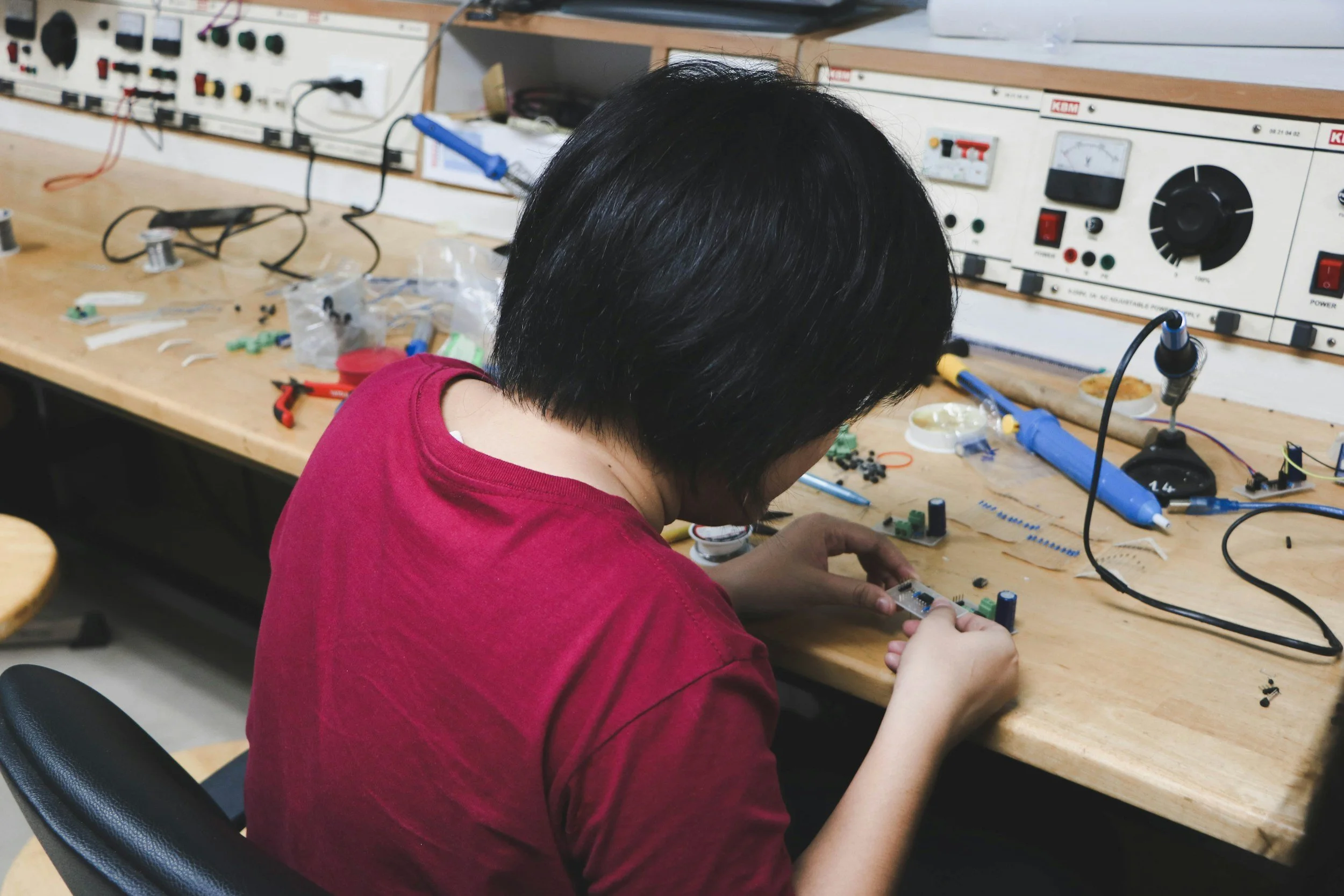
What a Typical Session Looks Like
Each two-hour session follows a purposeful structure while leaving room for discovery, experimentation, and unexpected questions.
Arrival and Safety Review
Students prepare their work areas, gather materials, and review the safety expectations connected to that day’s tools and systems.
Concept Introduction
A short, interactive lesson introduces the key scientific or engineering ideas students will need during the investigation.
Observation and Investigation
Students examine real components, make predictions, sketch systems, compare designs, and discuss what they believe is happening.
Build, Test, and Improve
Students apply the session’s concepts through a practical challenge. They test their work, identify problems, make adjustments, and test again.
Engineering Notebook
Students document observations, measurements, diagrams, discoveries, and questions that remain unanswered.
Share and Reflect
The group compares approaches and discusses what worked, what changed, and what the investigation revealed.
Responsible Cleanup
Students learn that caring for tools, organizing components, and restoring the workspace are part of completing an engineering task.
Inside a Sample Session:
Why Does It Snap Back?
During the Springs, Spools, and Retractors session, students begin by examining several objects that extend and retract. Rather than immediately opening them, students first observe the outside, test their movement, and predict what may be happening inside.
Students then investigate mechanisms such as:
Retractable tape measures
Pull-cord systems
Spring-loaded reels
Spools and winding mechanisms
Ratchets, locks, and release systems
As components become visible, students trace how energy is stored, released, and controlled. They compare different designs and consider why a manufacturer might select one mechanism rather than another.
Students then use what they have learned to plan and construct a simplified retracting system of their own. They test its range, reliability, and control, make adjustments, and document the final design in their engineering notebooks.
The session ends with students explaining not merely whether their design worked, but why it behaved as it did.
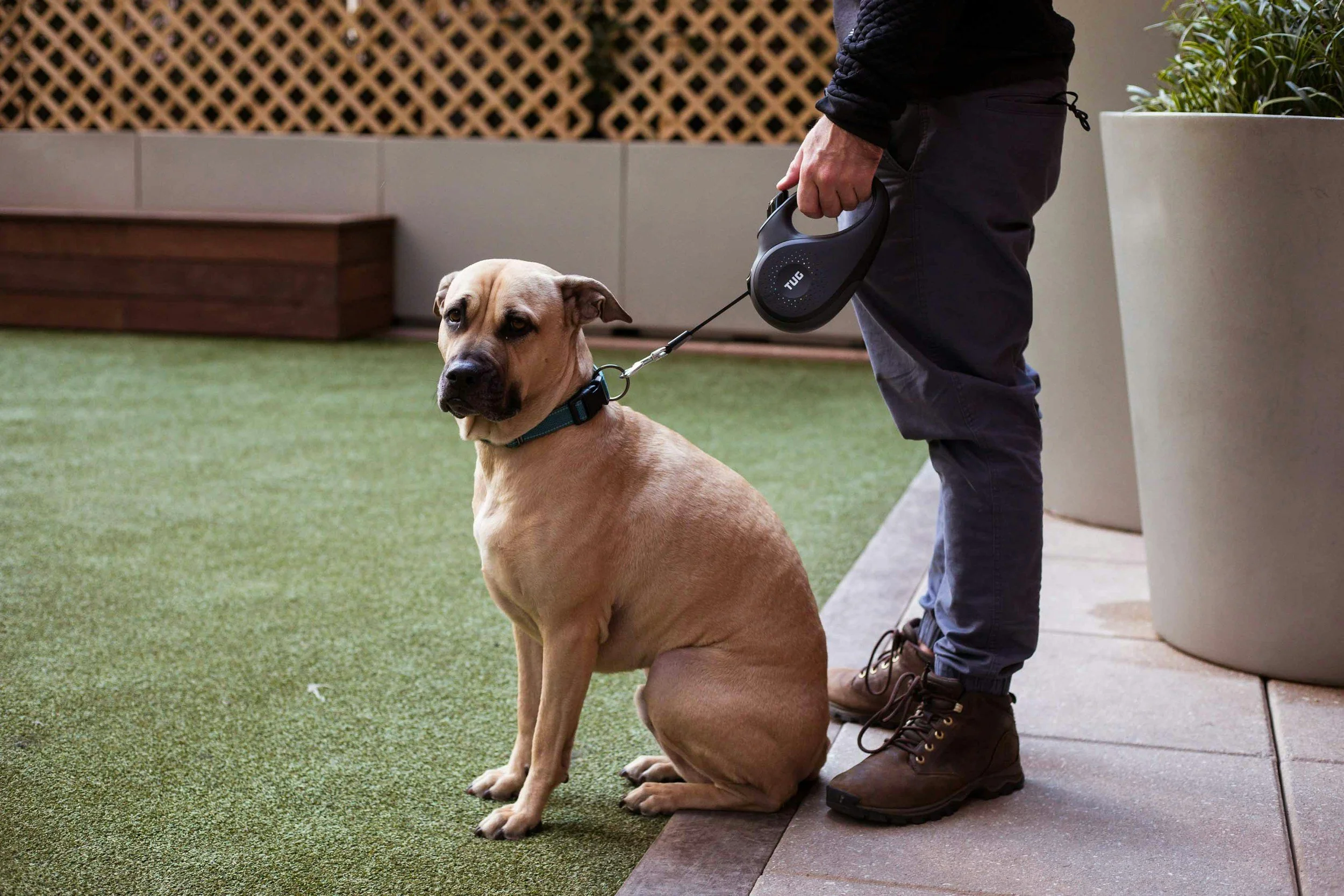
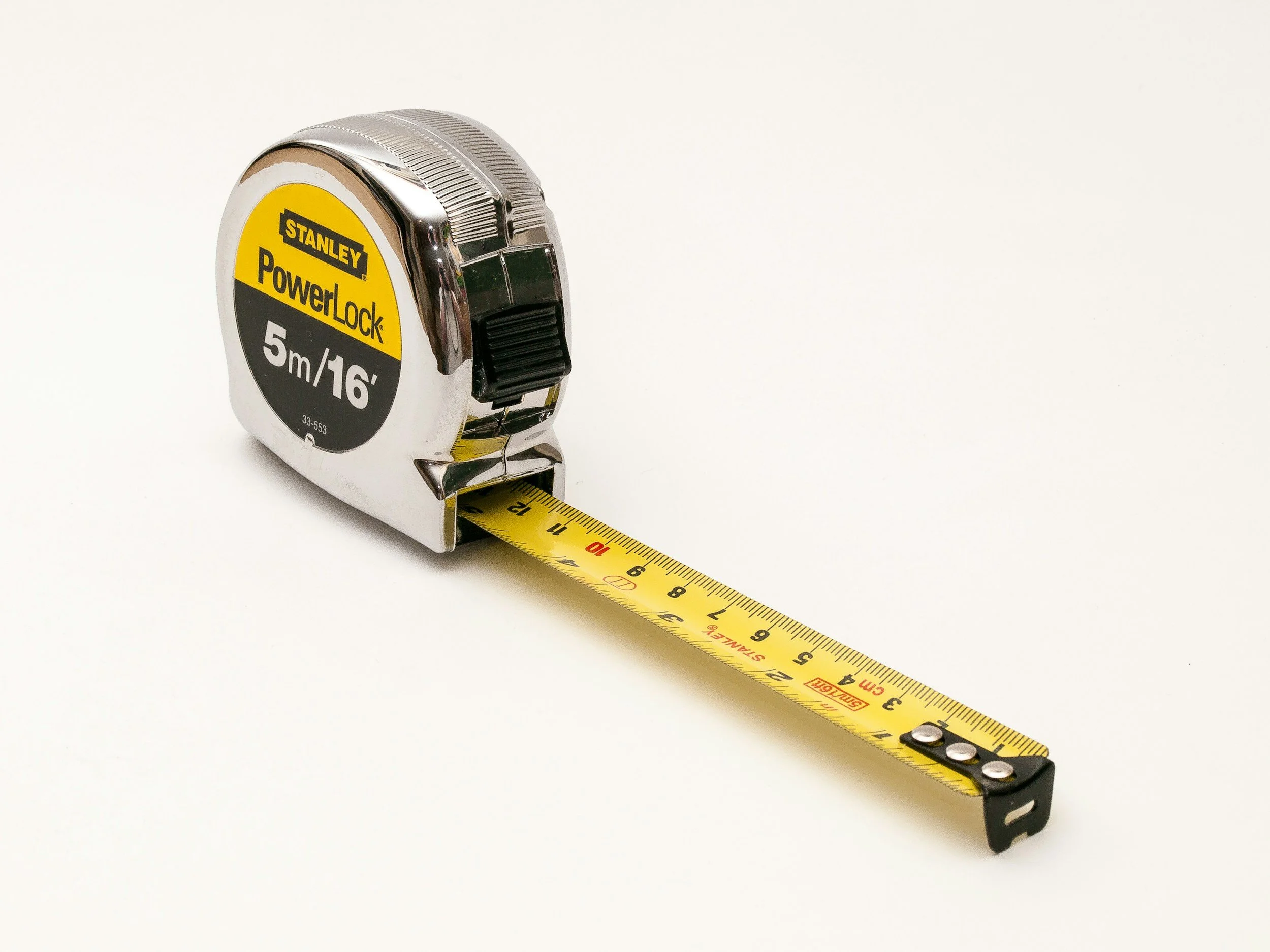
Students will investigate retractable devices such as tape measures, retractable dog leashes and roller shades.
Program Details
Recommended ages: 10–14
Program length: 12 weekly sessions
Session length: Two hours
Group size: A minimum of 8 and a maximum of 12 students
Location: A participating family’s home or another suitable parent-provided location in Dorado
Instruction: Small-group, hands-on instruction with demonstrations, guided investigation, building challenges, and collaborative problem-solving
Language: Instruction may be provided in English, with bilingual support available when helpful
Enrollment: Individual students may request a place in a forming group, or parents may organize a complete or partial private pod
Who Is This Program For?
How Things Work is designed for students who are curious about real objects and willing to participate actively in the process of investigation.
The program may be an especially strong fit for students who:
Ask how machines, tools, or everyday objects work
Enjoy building, repairing, experimenting, or taking things apart
Are ready for more depth than a one-time science activity
Can work responsibly in a small group
Are willing to test an idea more than once
Enjoy solving problems without always being given an immediate answer
Want practical experience alongside academic understanding
Students do not need prior engineering or tool experience. They do need to be willing to listen to safety instructions, handle materials responsibly, and contribute to the learning environment.
Safety Is Part of the Curriculum
Students do not simply receive rules before beginning. They learn why particular procedures matter and how responsible people assess risk before using a tool, opening a device, or testing a system.
Safety practices include:
Direct instruction before tools or equipment are introduced
Age-appropriate selection of tools and materials
Small-group supervision
Eye protection and other protective equipment when required
Clear boundaries around sharp, rusty, electrical, heated, or moving components
Instructor control of any step that is not appropriate for independent student handling
Secured hair, clothing, and jewelry around chains, gears, wheels, motors, and fans
A strict expectation that students stop and ask rather than force a stuck component
Organized work areas and careful end-of-session cleanup
Advance collection of emergency contacts, allergies, and relevant medical information
The ability to work safely, recognize limits, and seek appropriate assistance is treated as an essential engineering skill.
What Tuition Includes
Program tuition includes:
Twelve two-hour instructional sessions
Use of program tools and reusable equipment
Components and consumable building materials
Objects and systems used for guided disassembly
Safety equipment required for program activities
Engineering notebook materials
Take-home projects when applicable
Preparation and instruction by an experienced certified educator
The final Engineering Expo
Families will receive complete tuition, deposit, schedule, and payment information when a specific group opens for enrollment.
FAQs
Does my child need previous engineering experience?
No. The program introduces the necessary tools, concepts, and procedures as students progress. Curiosity, participation, and responsible behavior are more important than previous experience.
Will students use real tools?
Yes. Students use carefully selected, age-appropriate tools under direct instruction and supervision. Tool safety, selection, handling, and care are part of the curriculum.
Is this a robotics or coding class?
No. This program concentrates primarily on mechanical systems, forces, structures, fluid movement, motors, and everyday engineering. Electronics, sensors, Arduino systems, and introductory coding will be addressed more extensively in Advanced How Things Work.
Will students bring projects home?
Some student-built models may be taken home, while other materials and reusable components remain with the program. The emphasis is on understanding and experience rather than accumulating a new craft project every week.
Where is the program held?
Programs are held in a participating family’s home or another suitable location provided by the parent group in Dorado. Dorado STEM Academy does not currently operate from a permanent facility.
Can I register one child?
Yes. Individual families may request a place in a group that is currently forming. A pod begins after the required enrollment and suitable location have been confirmed.
Can parents organize their own group?
Yes. Parent-organized groups are encouraged. Families may bring a complete group or begin with a partial group and inquire about making the remaining spaces available to other interested families.
What happens if minimum enrollment is not reached?
Families will not lose their deposit if Dorado STEM Academy is unable to operate the program because the required minimum enrollment is not reached. The family may choose a refund or, when available, transfer the payment to another program.
What happens if my child misses a session?
Because each session involves substantial preparation, materials, and group instruction, individual missed sessions cannot normally be recreated or refunded. When possible, the instructor may provide a brief summary of the concepts covered.
Is this program appropriate for advanced learners?
Yes. The program is designed to allow capable students to move beyond basic observation and engage with increasingly complex questions, comparisons, design decisions, and explanations.
May parents remain during sessions?
Parent presence depends on the host location, available space, and needs of the group. Parents who remain must allow students to participate independently and follow the same safety and workspace expectations as the group.
Ready to Look Beneath the Surface?
How Things Work gives curious students the tools, knowledge, and confidence to investigate the systems surrounding them—and to approach unfamiliar problems with patience, sound reasoning, and the belief that they can figure things out.
Not ready to enroll yet?
Join the How Things Work Interest List